
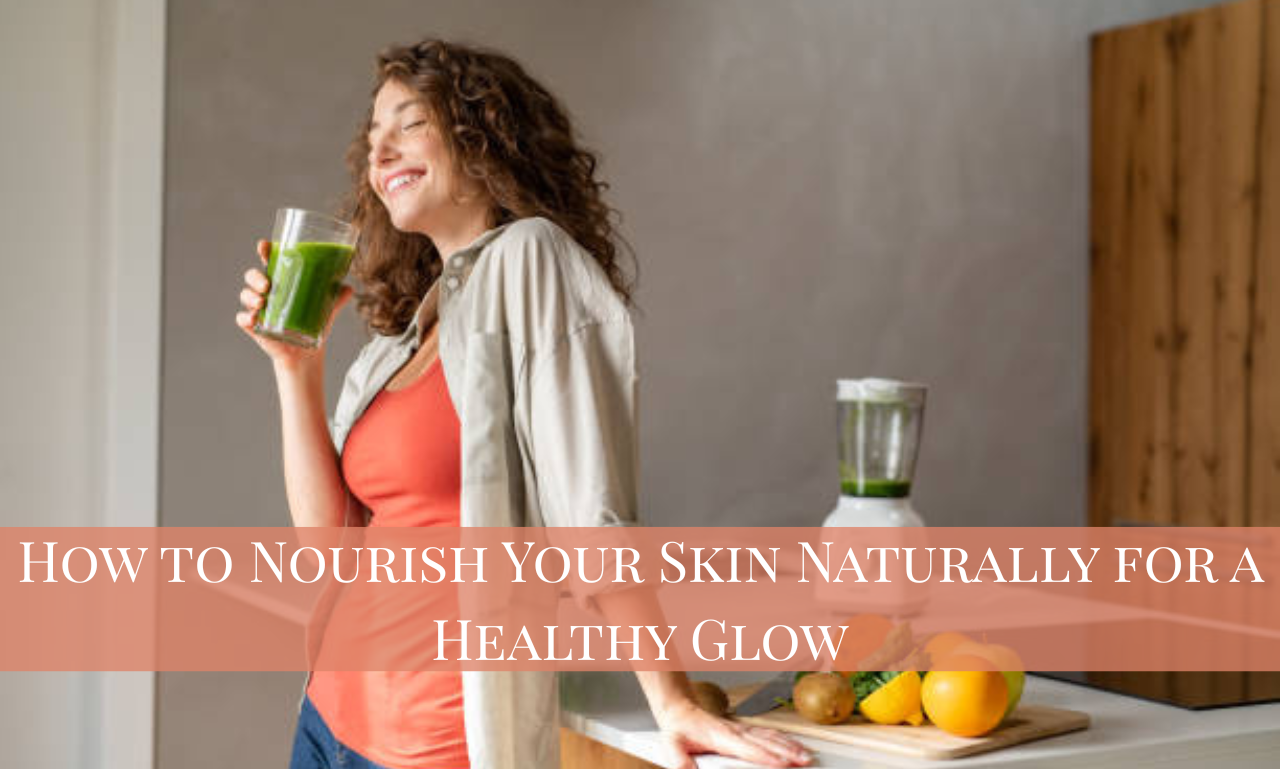
Discover 7 natural ways to nourish your skin—hydration, nutrient-rich smoothies, quality sleep, and lifestyle tips for a healthy, glowing complexion.
Do you find yourself waking up to tired-looking skin that is still dull, even after spending lots of money on expensive creams?
Do you wonder why certain individuals shine and others do not? Healthy, glowing skin isn’t about using expensive products or complicated routines. It’s about consistent nourishment—inside and out.
Staying hydrated, eating nutrient rich food, the quality of your sleep, and your everyday routine are all significant to your skin’s health.
Simple, natural habits can help you nourish your skin from the inside and out and enjoy the natural, healthy shine that results.
7 Tips to Nourish Your Skin Naturally for a Healthy Glow
- Stay Hydrated Throughout the Day
- Drink Nutrient-Rich Smoothies
- Prioritize Quality Sleep
- Protect Your Skin from the Sun
- Eat an Anti-Inflammatory, Balanced Diet
- Exercise Regularly
- Maintain a Gentle Skincare Routine
1. Stay Hydrated Throughout the Day
One of the simplest, yet most effective ways to increase the natural state of your skin is to drink water. To properly operate, every cell in your body, even skin cells, requires hydration.
By drinking sufficient water, the skin becomes supple and soft and is less prone to dryness or flakiness. Dehydration may cause your skin to appear dull, develop fine lines, and even cause a breakout.
Add herbal teas, coconut water, lemon, cucumber, or mint-infused water to increase hydration.
Not only do they hydrate your body, but they also contain antioxidants and vitamins that help prevent skin damage. Drink at least 8 glasses of water per day and feel the difference in the skin texture and radiance.
2. Drink Nutrient-Rich Smoothies
Would you not like your breakfast to be a skin treatment? You can feed your skin through smoothies. Vitamins A, C, and E are abundant in ingredients such as spinach, kale, berries, and avocado and help repair damaged skin, protect against free-radical damage, and reduce inflammation.
Following the addition of chia seeds, flaxseeds, or nuts, the body of the skin gets the necessary fatty acids that help to keep the skin elastic and well-hydrated.
The daily smoothie is a sure way to ensure your body gets the nutrients it needs to keep the skin healthy, and it’s a year-round boost to energy and well-being. Within a few weeks, you can feel the difference by making smoothies a regular part of your diet.
3. Prioritize Quality Sleep
Did you also know that your skin is repairing itself while you are asleep? Sleep plays a vital role in balancing hormones, repairing tissues, and improving blood circulation – all of which make skin healthy and glowing.
Lack of sufficient rest will make your skin look dull, dark encircled, and prematurely aged. Sleep deprivation can also be chronic and cause inflammation, acne, and other skin-related problems.
Establish a pre-sleep ritual that promotes healthy sleep, e.g., avoiding screens 1 hour before bed, keeping your room dark and cool, and retiring to bed at the same time every day. Aim for 7-9 hours of sleep for optimum recharge.
And even slight changes in your state of sleep can have a drastic effect on how your skin looks and who you are, in general.
4. Protect Your Skin from the Sun
On an average day, how frequently do you consider sun protection? A major cause of premature aging, pigmentation, and even skin cancer is the ultraviolet (UV) rays. Even temporary daily exposure will harm your skin without you even realizing it. Prevention is easier than correction.
The use of daily sunscreen, the use of protective clothing, and spending less time in the sunlight can greatly reduce UV damage.
Also, your wide-brimmed hats and sunglasses protect sensitive areas of your body, such as your face and eyes. The practice of sun protection not only ensures that your skin is healthy but also helps you maintain a youthful glow as you grow older.
5. Eat an Anti-Inflammatory, Balanced Diet
Have you heard that what you eat makes your skin look and feel better? High-energy diets rich in processed foods, sugar, and unhealthy fats may trigger inflammation, leading to a breakout, redness, or dullness.
Conversely, intake of whole foods high in antioxidants, vitamins, and healthy fats helps to repair the skin, improve the tone, and make it look radiant!
- Healthy fats (avocados, nuts, olive oil) for barrier support
- Antioxidant-rich foods (berries, leafy greens) to fight free radicals
- Omega-3 fatty acids (salmon, chia seeds) to reduce inflammation
- Protein for collagen production
- Fruit and Vegetables for better gut health and vibrant skin
6. Exercise Regularly
Your skin is not only good for your heart and muscles; it also benefits from exercise. Exercise enhances the efficiency of blood flow through the body and the distribution of oxygen and materials to the skin cells.
Increased circulation may lead to a natural, healthy glow and help clear out toxins that may be causing breakouts.
Even exercises such as yoga and jogging (or even brisk walking) help reduce stress levels, and this process accordingly prevents skin problems caused by stress, such as acne or eczema outbreaks.
Exercise as a routine measure can be added to your diet, water intake, and sleep, and will give your skin a more glowing, younger look.
7. Maintain a Gentle Skincare Routine
The way you handle your skin on the outside is also as important as what you put in it on the inside.
Excessive use of harsh cleansers or over-exfoliation may strip away natural oils, causing irritation and drying out the skin.
The skin’s natural barrier is maintained with a gentle skincare routine, keeping it hydrated and strong.
Wash your face twice a day with a mild face cleanser, keep your face moisturized, and take off your makeup before bedtime.
Basic changes, such as using a face mask once a week or using natural products for exfoliation, will even work better at improving the texture of your skin. The most important thing is consistency, which has the most positive long-term outcomes with small, everyday habits.
Final Thoughts:
Nourishing your skin is about balance: hydration, high-nutrition smoothies, good sleep, sun protection, a balanced diet, exercise, and a consistent skincare routine.
These are the habits to practice every day, and then your skin will automatically be radiant and healthy. Regularity is important — your skin and overall health will make you glad. When you treat your skin gently and support it from within, it thrives naturally.